

Hey there! As a supplier of the kettle CKD production line, I often get asked about the statistical data regarding its production. In this blog post, I'm gonna break down some of the key stats and give you a better understanding of what goes on in the world of kettle CKD production.
Production Volume
Let's start with the production volume. Over the past few years, the demand for kettles has been on the rise, especially with the increasing popularity of hot beverages like tea and coffee. Our kettle CKD production line has been running at full steam to meet this demand. On average, we can produce around 500 - 800 kettles per day, depending on the complexity of the design and the specific requirements of the order.
During peak seasons, like the holiday period or the start of the cold winter months, we can ramp up our production to as high as 1000 kettles per day. This flexibility allows us to cater to the fluctuating market demands and ensure that our customers always have enough stock to meet their own sales targets.
Efficiency Metrics
Efficiency is a crucial aspect of any production line, and ours is no exception. We've implemented a range of measures to optimize the efficiency of our kettle CKD production line. One of the key metrics we track is the cycle time. The cycle time refers to the time it takes to complete one full production cycle, from the initial assembly to the final quality check.
On average, our cycle time for a single kettle is about 15 - 20 minutes. This includes all the steps involved in the CKD process, such as component assembly, welding, and testing. By keeping the cycle time relatively short, we're able to increase our overall production output and reduce costs.
Another important efficiency metric is the uptime of the production line. Uptime refers to the percentage of time that the production line is actually running and producing kettles. We strive to maintain an uptime of at least 90%. This means that our production line is operational for more than 90% of the scheduled production hours. To achieve this, we conduct regular maintenance and keep a stock of spare parts on hand to quickly address any technical issues that may arise.
Quality Control
Quality is our top priority, and we have a rigorous quality control system in place to ensure that every kettle that comes off our production line meets the highest standards. We use a combination of automated testing equipment and manual inspections to check for any defects.
The defect rate is a key quality control metric that we closely monitor. On average, our defect rate is less than 1%. This means that for every 100 kettles produced, less than 1 has a defect. This low defect rate is a testament to the quality of our production processes and the skills of our workers.
In addition to the defect rate, we also track the number of customer complaints. We take every customer complaint seriously and use it as an opportunity to improve our production processes. Over the past year, the number of customer complaints has been steadily decreasing, which is a positive sign that our quality control measures are working.
Equipment Utilization
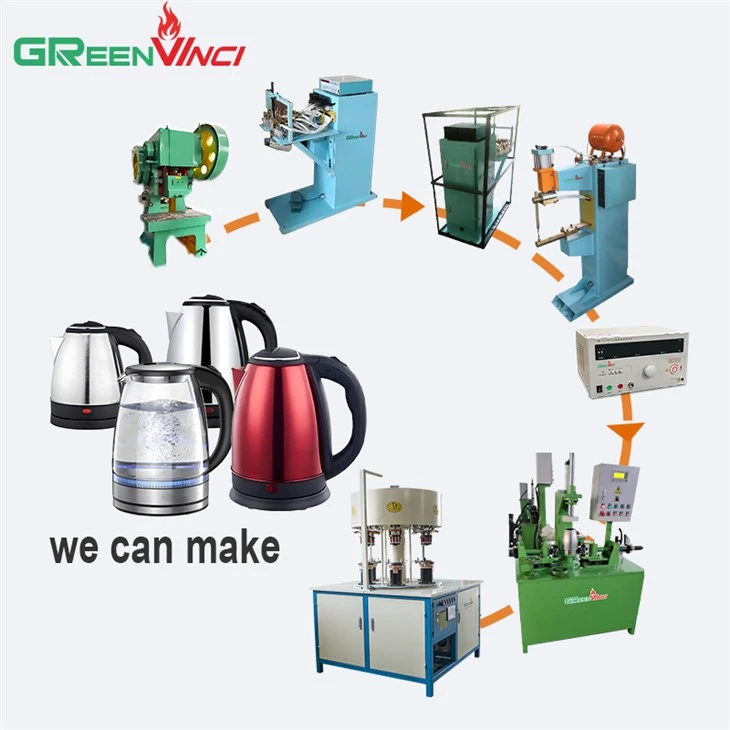
The equipment used in our kettle CKD production line plays a crucial role in determining the production output and quality. We use a variety of machines, including Induction Brazing Machine, Electric Kettle Production Line, Electric Kettle Making Machines, Edge Beading Machine, and Tig Welding Machine.
We track the utilization rate of each piece of equipment to ensure that they are being used effectively. The utilization rate refers to the percentage of time that a machine is actually in use. On average, our equipment utilization rate is around 80%. This means that our machines are being used productively for 80% of the available production time.
To improve the equipment utilization rate, we schedule regular maintenance and training for our operators. This helps to minimize downtime due to equipment breakdowns and ensures that our operators are using the machines to their full potential.
Cost Analysis
Cost is always a major consideration in any production process. We've conducted a detailed cost analysis of our kettle CKD production line to identify areas where we can reduce costs without sacrificing quality.
The major cost components in our production process include raw materials, labor, and equipment. Raw materials account for about 40 - 50% of the total production cost. We work closely with our suppliers to negotiate the best prices and ensure a stable supply of high - quality raw materials.
Labor costs make up about 30 - 40% of the total production cost. We invest in training our workers to improve their skills and productivity, which helps to keep labor costs in check. Equipment costs, including purchase, maintenance, and depreciation, account for the remaining 10 - 20% of the total production cost.
By carefully managing these cost components, we've been able to keep our production costs competitive in the market.
Conclusion
In conclusion, the statistical data for our kettle CKD production line shows that we have a highly efficient and productive operation. We're able to produce a large volume of high - quality kettles at a competitive cost, thanks to our optimized production processes, strict quality control, and effective equipment management.
If you're in the market for a reliable kettle CKD production line supplier, I'd love to have a chat with you. Whether you're a large - scale manufacturer looking to expand your production capacity or a startup just starting out in the kettle business, we can offer you a customized solution that meets your specific needs. Don't hesitate to reach out and start a conversation about your procurement requirements.