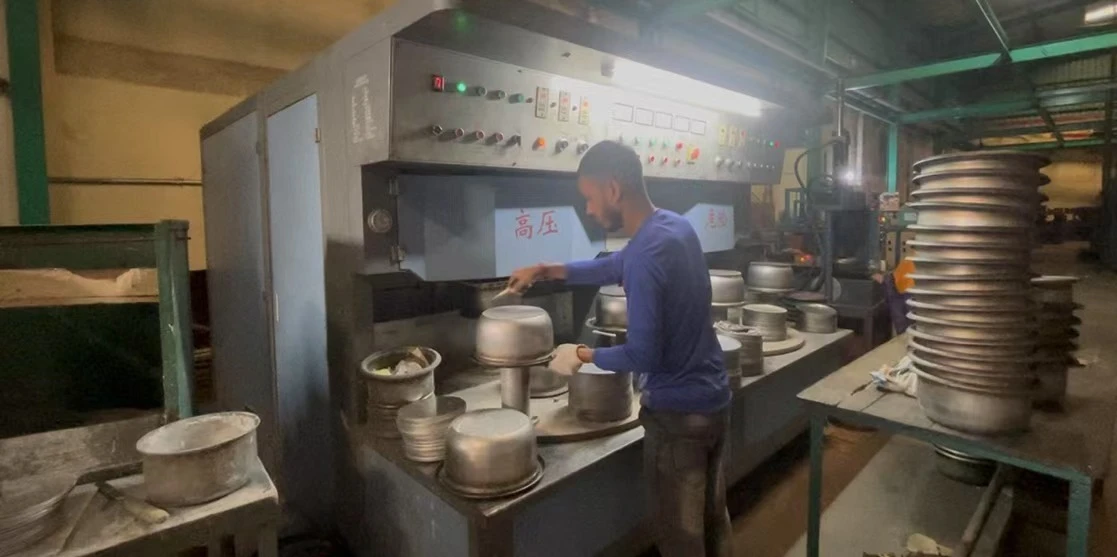
In the high-end stainless steel cookware market, composite bottom technology is a key quality indicator. It perfectly combines the durability and aesthetics of stainless steel with the rapid thermal conductivity of aluminum and 430 stainless steel. However, during production, three major production issues-composite bottom delamination, bottom blistering, and pot body deformation-trouble every production manager. This not only leads to significant yield losses and low production efficiency, but also damages brand reputation.
In reality, these problems are not intractable. The root cause often lies not in the material itself, but in the core joining process-brazing. This article will delve into the root causes and reveal how to achieve a perfect solution through advanced brazing technology.

I. In-Depth Analysis of the Root Causes
1. Composite Bottom Delamination: Bond Failure
Root Cause: Insufficient brazing joint strength.
Improper brazing filler metal selection: Poor brazing wettability (fluidity) prevents the filler metal from fully filling the gap between the composite bottom and the pot body, creating effective capillary action. Interface contamination: Oil, oxides, or impurities on the weld surface hinder the metallurgical bond between the brazing filler metal and the base metal, much like applying oil to glue.
Incorrect process parameters: Insufficient heating temperature or heating time prevents the brazing filler metal from fully melting and flowing; excessively high temperatures may cause the filler metal to burn or form brittle compounds with the base metal.
2. Bottom blistering
Root cause: Gas is trapped between the composite layer and the pot body during welding, expanding due to heat and forming bulges.
Inadequate surface cleanliness: Microscopic moisture and oil vaporize rapidly at high temperatures.
Insufficient or uneven pressure: Insufficient pressure applied during welding to expel gas and excess brazing filler metal from the brazing seam.
Flux issues: Poor quality or uneven application of the flux (if used) can result in residual gas during the film removal process.
3. Pot body deformation: Uneven thermal stress
Root cause: Uneven heating of the workpiece during welding generates significant internal stress, which is then released upon cooling, leading to deformation.
Overall Heating: Using overall heating methods like furnace welding, heats the entire pot to a high temperature, resulting in uneven contraction during cooling.
Poor Heat Source Concentration: The heat source cannot be precisely focused on the weld area, causing other parts of the pot to be heated.
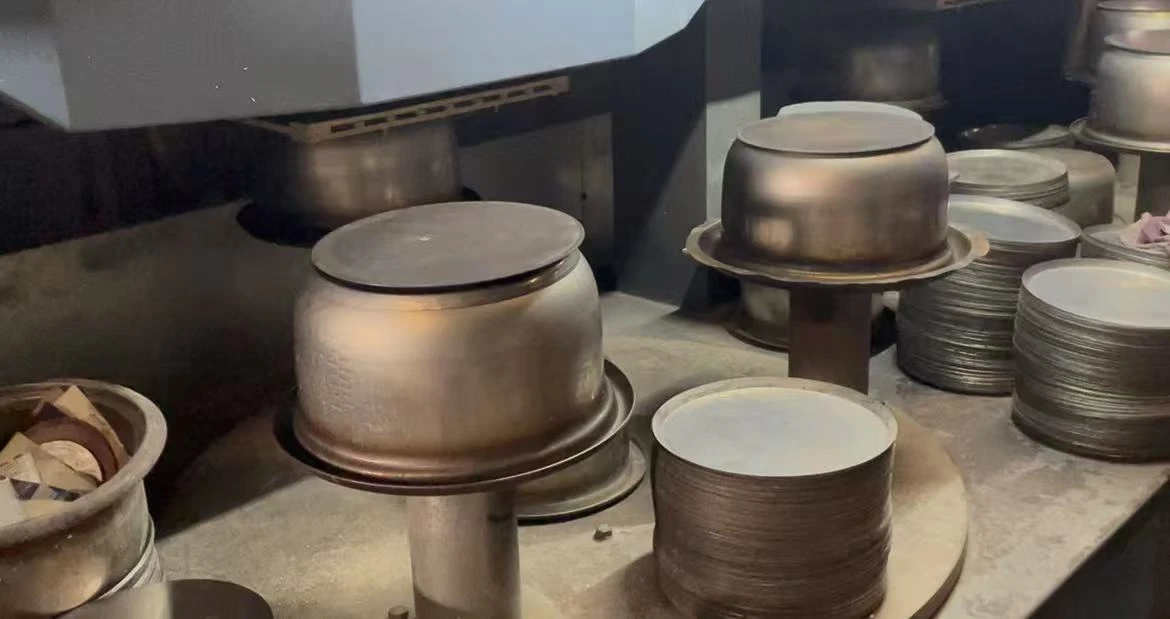
II. Root-Cause Solution: Advanced Brazing Technology
The key to systematically addressing the above issues lies in the use of sophisticated, automated brazing equipment. Modern technologies, such as high-frequency induction brazing machines and vacuum brazing machines, provide a perfect solution.
High-Frequency Induction Brazing Machines - Balancing Efficiency and Precision: How to Solve the Blasting Problem?
1. Precise Temperature Control: The PLC system precisely controls heating power and time, ensuring that the brazing material melts and flows within the optimal temperature range, forming a strong metallurgical bond.
2. Rapid Localized Heating: The induction eddy currents are concentrated only on the weld area at the bottom of the pot, concentrating the energy, ensuring adequate brazing wetting, and resulting in extremely strong joints.

How to Solve the Blistering Problem?
Integrated Pressure System: The equipment is equipped with a hydraulic clamping device that applies constant, uniform pressure to the composite bottom during welding, effectively discharging air from the brazing seam and ensuring a tight fit between the composite layer and the pot body.
How to Solve Deformation?
Minimal Heat-Affected Zone: The "skin effect" of high-frequency heating means that heat is concentrated only on a very thin layer on the surface of the pot bottom, while the entire pot body remains at a low temperature. This fundamentally eliminates deformation caused by thermal stress.
III. Best Practices: Process Secrets That Surpass Equipment
Even the most advanced equipment requires scientific processes. Here are a few tips to ensure foolproof results:
1. Strict Pre-treatment: Before welding, the pot body and composite bottom must be thoroughly cleaned and degreased to ensure an absolutely clean weld interface.
2. Scientific Tooling Design: Customized fixtures not only provide pressure but also guide heat distribution and assist in positioning, ensuring consistent results. 3. Matching the brazing filler metal to the base material: Choose a brazing filler metal that is highly compatible with both stainless steel and aluminum (or copper), such as nickel-based or silver-based filler metals, and create precise pre-set rings to ensure accurate dosage.
Fragmentation, blistering, and deformation of composite bottoms are not insurmountable obstacles in stainless steel cookware production. They are essentially manifestations of the conflict between traditional, outdated welding processes and high-quality requirements. By upgrading to an automated, precise, high-frequency induction solution, you can not only completely eliminate these production pain points and significantly improve product yield and production efficiency, but also forge high-end cookware with a more stable structure, more uniform heat conduction, and a more refined appearance, thereby establishing a solid quality barrier in the fiercely competitive market.
With 15 years of deep experience in the small appliance industry, Davinci boasts a unique dual advantage: we are both an experienced small appliance manufacturer and a professional machinery manufacturer. Whether it's a kettle heating plate brazing, or stainless steel cookware bottom brazding, we have extensive experience and solutions.
Consult our brazing technology experts for customized solutions to your composite bottom production challenges!
Whatsapp/Wechat/Phone:+8618029293151
Email:sales1@vincienegy.com
Jenny Yao