

When it comes to the production of kettles, the Kettle Spot Welding Machine plays a crucial role. As a leading supplier of Kettle Spot Welding Machines, we understand the importance of optimizing electrode design to enhance the performance and efficiency of the machine. This blog will explore the key factors and strategies for optimizing the electrode design of a Kettle Spot Welding Machine.
Understanding the Basics of Kettle Spot Welding
Before delving into electrode design optimization, it's essential to have a solid understanding of kettle spot welding. Spot welding is a resistance welding process used to join two or more metal sheets together by applying pressure and an electric current through electrodes. In the context of kettle production, spot welding is commonly used to assemble various components of the kettle, such as the kettle spout.


The quality of spot welding depends on several factors, including the welding current, electrode force, weld time, and electrode design. Among these factors, electrode design has a significant impact on the welding quality, electrode life, and overall productivity of the welding process.
Factors Affecting Electrode Design
Material Selection
The choice of electrode material is crucial for optimizing electrode design. The material should have high electrical conductivity, good thermal conductivity, and high mechanical strength to withstand the pressure and heat generated during the welding process. Common electrode materials used in spot welding include copper alloys, such as chrome-copper and zirconium - copper. These alloys offer a good balance between electrical conductivity and mechanical properties.
Electrode Shape and Geometry
The shape and geometry of the electrode also play a vital role in the welding process. The electrode tip shape can be flat, domed, or pointed, depending on the specific welding requirements. A flat - tipped electrode is suitable for welding large contact areas, while a domed or pointed electrode is more appropriate for welding small or irregularly shaped parts.
The electrode diameter and length are also important considerations. The diameter should be selected based on the thickness of the metal sheets being welded and the welding current requirements. A larger diameter electrode can carry more current and is suitable for welding thicker sheets, while a smaller diameter electrode is used for thinner sheets.
Cooling Design
Effective cooling of the electrodes is essential to maintain their performance and prolong their life. During the welding process, a significant amount of heat is generated at the electrode-workpiece interface. If this heat is not dissipated properly, it can lead to electrode overheating, which can cause electrode wear, surface damage, and poor welding quality.
There are several cooling methods available, including water - cooled and air - cooled electrodes. Water - cooled electrodes are more efficient in dissipating heat and are commonly used in high - production welding applications. They consist of a hollow electrode body with a water passage for circulating cooling water.
Strategies for Optimizing Electrode Design
Customized Design
One of the most effective ways to optimize electrode design is to customize the electrodes according to the specific requirements of the kettle welding process. This involves working closely with the kettle manufacturers to understand their product specifications, welding requirements, and production volume. By customizing the electrode shape, material, and cooling design, we can ensure that the electrodes provide the best possible welding performance and quality.
For example, if the kettle has a complex shape or requires spot welding in hard - to - reach areas, we can design electrodes with a special shape or configuration to ensure proper contact with the workpiece. Customized electrodes can also be designed to optimize the welding current distribution, which can improve the weld strength and reduce the occurrence of weld defects.
Simulation and Testing
Before mass - producing the electrodes, it's important to use simulation and testing techniques to validate the electrode design. Computer - aided simulation software can be used to model the welding process and predict the heat distribution, electrode wear, and welding quality. This allows us to make adjustments to the electrode design before fabricating the actual electrodes, reducing the cost and time associated with trial - and - error.
In addition to simulation, physical testing is also essential. We can conduct welding tests using the prototype electrodes on different types of kettle materials and thicknesses. By analyzing the weld quality, electrode wear, and other parameters, we can fine - tune the electrode design to achieve the best results.
Regular Maintenance and Inspection
Proper maintenance and inspection of the electrodes are crucial for ensuring their long - term performance. Regular cleaning of the electrode tips can prevent the accumulation of dirt, oxide, and other contaminants, which can affect the electrical conductivity and welding quality. We recommend using a dedicated electrode cleaning tool or a mild abrasive to clean the electrode tips after a certain number of welding cycles.
Inspecting the electrodes for wear and damage is also important. If the electrode tips show signs of excessive wear, deformation, or damage, they should be replaced immediately to avoid poor welding quality and potential equipment failure.
The Impact of Optimized Electrode Design on Kettle Production
Improved Welding Quality
An optimized electrode design can significantly improve the welding quality of kettles. By ensuring proper contact between the electrode and the workpiece, controlling the welding current distribution, and dissipating heat effectively, we can reduce the occurrence of weld defects, such as porosity, cracks, and incomplete fusion. This results in stronger and more reliable welds, improving the overall quality and durability of the kettles.
Increased Productivity
Optimized electrodes can also increase the productivity of the kettle production line. By reducing electrode wear and downtime for electrode replacement, the welding machine can operate continuously for longer periods, increasing the number of kettles produced per hour. Additionally, the improved welding quality reduces the need for rework, which further improves the production efficiency.
Cost Savings
In the long run, optimizing electrode design can lead to significant cost savings. By extending the electrode life, manufacturers can reduce the frequency of electrode replacements, which reduces the cost of consumables. The improved welding quality and productivity also result in lower production costs per kettle, making the manufacturing process more cost - effective.
Related Equipment in Kettle Production
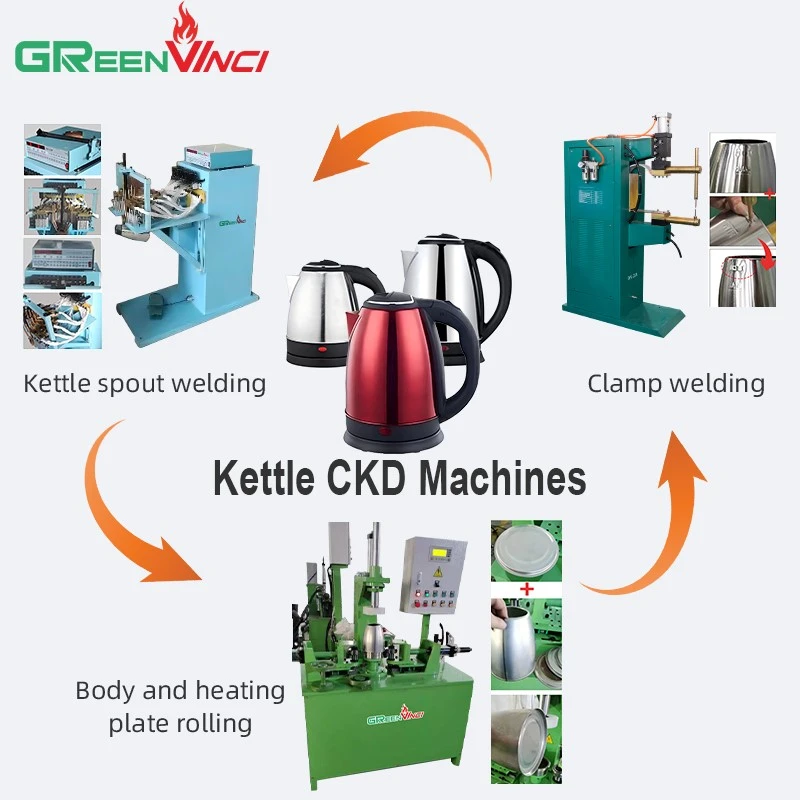
In addition to the Kettle Spot Welding Machine, there are other important pieces of equipment in the kettle production line. The Edge Rolling Machine is used to roll the edges of the kettle body, ensuring a smooth and even finish. The Automatic Multi - Station Brazing Machine and Electric Kettle Brazing Machine are used for brazing different components of the kettle, providing strong and durable joints. All these machines work together in the Electric Kettle Production Line to ensure the efficient and high - quality production of kettles.
Conclusion
Optimizing the electrode design for a Kettle Spot Welding Machine is a complex but essential task for improving the welding quality, productivity, and cost - effectiveness of kettle production. By considering factors such as material selection, electrode shape and geometry, and cooling design, and implementing strategies like customized design, simulation and testing, and regular maintenance, we can achieve significant improvements in the performance of the welding machine.
If you are in the market for a high - quality Kettle Spot Welding Machine or need assistance with electrode design optimization, we invite you to contact us for a detailed discussion. Our team of experts is ready to provide you with the best solutions tailored to your specific requirements.